



Discover Simple Ways to Improve Your Mindset, Reach Your Goals, and Become Your Best Self
Embarking on the journey of personal growth and self-improvement is a transformative experience that enables individuals to unlock their full potential and lead a more fulfilling life. This ultimate guide to personal growth will explore various facets of this continuous process, providing insights and actionable strategies to help you become the best version of yourself.
Understanding Personal Growth

What is Personal Growth?
Personal growth is a lifelong process of enhancing oneself. It involves actively seeking new knowledge, developing skills, and improving one’s character to achieve personal objectives and live a more meaningful life. It’s about consciously moving beyond your comfort zone to embrace new challenges and opportunities for self-development, across various dimensions, including:
- Mentally
- Emotionally
- Socially
- Spiritually
The Importance of Personal Development
The importance of personal development cannot be overstated, as it is crucial for navigating life’s complexities and achieving a sense of purpose. Engaging in personal growth and development allows individuals to set clear goals, cultivate a growth mindset, and continuously strive to become a better person. This ongoing self-improvement empowers you to adapt to change, overcome obstacles, and ultimately live your best life.
Stages in the Journey of Personal Growth
The journey of personal growth is not a linear path but rather a dynamic process with distinct stages. It often involves a series of steps, including:
- Self-awareness, where individuals identify areas for improvement and set personal growth goals.
- The planning stage, where a personal growth plan is crafted.
- Action and consistent effort, pushing into the growth zone.
Regular reflection, perhaps through journaling, helps to refine this continuous self-development and ensure you remain on the path of personal growth.
Creating a Personal Growth Plan
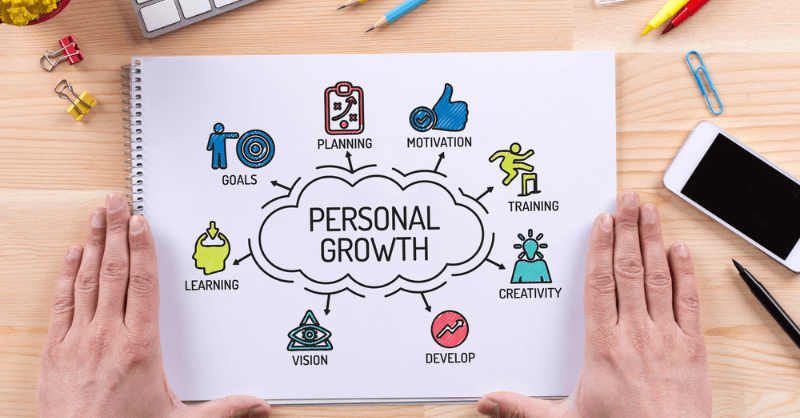
A personal growth plan serves as a roadmap for becoming the best version of yourself. Rather than relying on motivation alone, a structured plan helps you identify meaningful goals, develop productive habits, and make steady progress toward long-term success. Whether your focus is improving your career, relationships, health, or mindset, having a clear strategy significantly increases your chances of success.
Personal growth is not a one-time achievement but a lifelong journey of continuous learning, self-reflection, and improvement. By creating a personalized action plan, you can transform your aspirations into achievable milestones and ultimately turn your dreams into reality.
Defining Your Personal Growth Goals

Every successful personal growth journey begins with clearly defined goals. Without direction, it’s easy to lose focus or become overwhelmed by competing priorities. Setting meaningful personal development goals provides clarity and helps you concentrate your energy on the areas that will have the greatest impact on your life.
Identify What Matters Most
Start by evaluating the different aspects of their lives that contribute to happiness and fulfillment.
Consider areas such as:
Career and professional success
Physical health and a healthy lifestyle
Mental well-being
Financial stability
Relationships
Personal skills
Emotional intelligence
Spiritual growth
By identifying where you want to grow, you create a solid foundation for meaningful and lasting change.
Adopt a Growth Mindset
Developing a positive mindset is one of the most important elements of personal development.
Psychologist Dweck introduced the concept of the growth mindset, emphasizing that abilities and intelligence can be developed through dedication, learning, and perseverance.
Instead of viewing setbacks as failures, learn to see them as opportunities to grow and improve. This mindset encourages striving for growth, resilience, and continuous learning.
Build Self-Confidence
Every goal you achieve strengthens your self-confidence.
Start with realistic objectives that allow you to experience regular wins. Small accomplishments build momentum, making larger goals feel increasingly attainable.
Remember that becoming your best self is about steady improvement rather than perfection.
SMART Goals for Personal Improvement
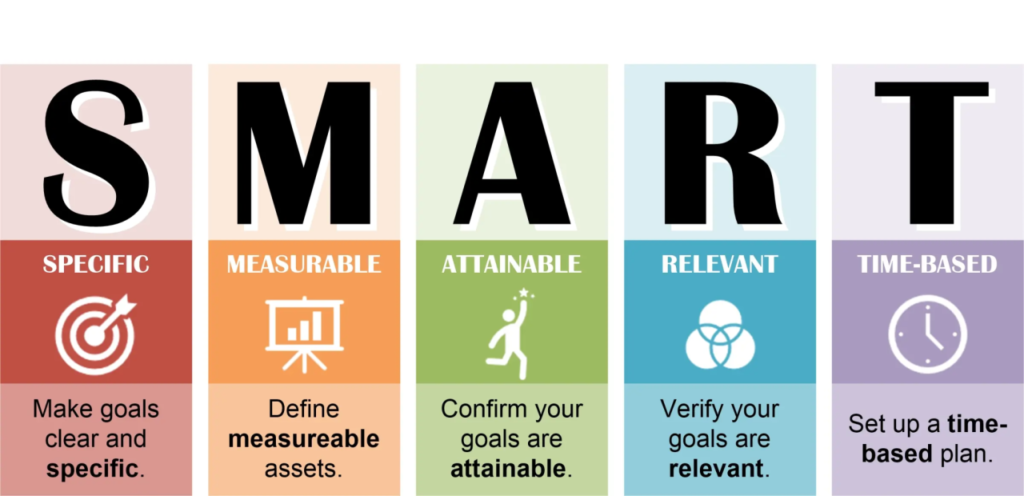
One of the best strategies for creating an effective personal growth plan is using SMART goals. This proven framework transforms broad ambitions into practical action steps that are easier to achieve and measure.
| SMART Goal Component | How It Supports Personal Growth |
|---|---|
| Specific | Clearly defines what you want to accomplish. |
| Measurable | Allows you to monitor progress toward your goals. |
| Achievable | Keeps goals realistic and attainable. |
| Relevant | Aligns goals with your personal values and long-term vision. |
| Time-bound | Creates accountability by establishing clear deadlines. |
Using SMART goals helps you remain focused while maintaining motivation throughout your personal growth journey.
Focus on Meaningful Progress
Rather than trying to change everything at once, concentrate on one or two important goals at a time.
Examples include:
Reading one personal development book each month.
Beginning a daily meditation practice.
Exercising four times a week.
Learning a new professional skill.
Improving communication abilities.
Breaking larger objectives into manageable milestones makes success far more achievable.
Steps to Develop an Effective Growth Plan

Creating a personal growth plan involves more than writing down goals. It requires consistent action, regular evaluation, and a willingness to adapt as you continue learning.
Create an Action Plan
Once your goals are established, break them into smaller, achievable tasks.
For each objective, identify:
Daily habits
Weekly milestones
Monthly reviews
Resources you’ll need
Skills you want to develop
This structured approach helps you stay organized and maintain momentum.
Practice Regular Self-Reflection
Consistent self-reflection allows you to recognize both your strengths and areas for improvement.
Take time each week to ask yourself:
What progress have I made?
What challenges did I face?
What lessons did I learn?
What can I improve next week?
Honest reflection encourages continuous improvement while helping you stay aligned with your goals.
Track Your Progress
One of the most effective ways to stay motivated is by monitoring your achievements.
Consider:
Writing in a journal
Using a habit tracker
Recording milestones
Reviewing completed goals
Tracking your progress toward your goals provides tangible evidence of your growth while highlighting opportunities for further development.
Challenge Yourself
Real growth happens outside your comfort zone.
While staying comfortable feels safe, meaningful personal development often requires embracing new experiences and taking calculated risks.
Examples include:
Learning a new skill
Speaking in public
Starting a business
Traveling independently
Taking on leadership opportunities
Each challenge helps you become better while expanding your confidence and capabilities.
Develop Habits That Support Long-Term Growth
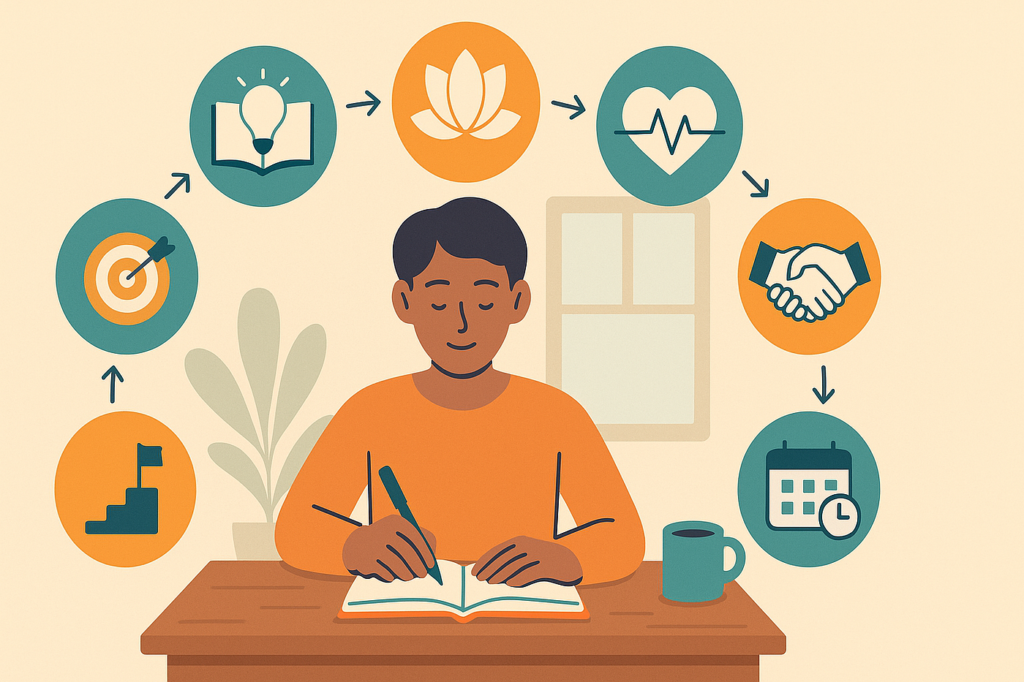
Your daily habits ultimately determine your long-term results.
Creating routines that support your personal growth will improve both your productivity and overall well-being.
Healthy habits include:
Daily exercise
Reading regularly
Practicing gratitude
Maintaining a healthy lifestyle
Getting adequate sleep
Practicing mindfulness
Following a consistent meditation practice
These habits positively influence both your physical and mental health while supporting sustainable growth.
Transform Your Thought Patterns
Your mindset shapes your actions.
Replacing limiting thought patterns with empowering ways of thinking helps create lasting change.
Practice using positive affirmations to reinforce confidence and optimism.
Simple affirmations like:
“I am capable of achieving my goals.”
“Every challenge helps me grow.”
“I improve every day.”
can gradually reshape your thinking and strengthen your resilience.
Commit to Lifelong Personal Growth

The best personal growth plans are never truly finished because growth itself is a continuous process. Every new experience presents an opportunity to learn, improve, and evolve.
Whether your goals involve greater professional success, stronger relationships, improved health, or achieving self-actualization, your commitment to continuous learning will shape the future you create.
Stay curious, remain open to new opportunities, and don’t be afraid to reignite your motivation whenever challenges arise. By embracing striving for growth, maintaining a positive mindset, practicing regular self-reflection, and consistently taking action, you’ll steadily improve your life while increasing your confidence, expanding your potential, and transforming your dreams into reality. Over time, these intentional efforts will positively influence every aspect of your life and help you become the person you aspire to be.
Developing a Growth Mindset
What is a Growth Mindset?
A growth mindset is a fundamental component of the ultimate guide to personal growth, representing the belief that one’s abilities and intelligence can be developed through dedication and hard work. This contrasts with a fixed mindset, where individuals believe their traits are static. Embracing a growth mindset allows you to view challenges as opportunities for self-development and learning, pushing you further along the path of personal growth. It’s about cultivating resilience and a continuous desire to become a better person.
Overcoming the Comfort Zone
Overcoming the comfort zone is a critical aspect of any personal growth journey, as true personal growth and development often occur when we venture beyond familiar territory. This process involves consciously embracing new challenges and experiences that may initially feel daunting. By stepping into the growth zone, individuals can expand their capabilities, learn new ways to grow, and build confidence in their ability to adapt. Regularly pushing these boundaries is essential to unlocking your full potential and achieving long-term goals.
Strategies to Foster a Growth Mindset
Fostering a growth mindset is integral to sustained personal development and achieving your personal growth goals. Proven strategies include reframing failures as learning opportunities, seeking constructive feedback, and celebrating effort over inherent talent. Engaging in continuous learning, practicing self-compassion, and maintaining a reflective practice like journaling can also reinforce this mindset. These approaches empower individuals to consistently work towards becoming the best version of themselves, ensuring their personal growth journey is both fulfilling and effective.
Ways to Grow in Your Personal Journey

Practicing Self-Development Techniques
Practicing self-development techniques is a cornerstone of any successful personal growth journey, offering actionable ways to grow and enhance various aspects of your life. These techniques can include mindfulness meditation to improve focus, time management strategies to achieve clear goals, or skill-building exercises to further your career. Consistent engagement with these practices helps you move out of your comfort zone and into the growth zone, fostering continuous self-improvement and enabling you to become the best version of yourself, aligning with your personal growth goals.
Exploring Your Growth Zone
Exploring your growth zone is a critical step in personal development, as it is where true personal growth and development occur. This involves intentionally pushing past the familiar boundaries of your comfort zone to embrace new challenges and opportunities for learning. By venturing into this uncomfortable yet fertile territory, you uncover new ways to grow, develop resilience, and expand your capabilities. This proactive exploration is essential for making significant strides on your path of personal growth and ultimately realizing your full potential.
Building Resilience in the Face of Challenges
Building resilience in the face of challenges is an indispensable aspect of the personal growth journey, empowering you to navigate setbacks and emerge stronger. This involves developing a growth mindset, which allows you to view obstacles not as failures but as opportunities for learning and self-improvement. By cultivating strategies such as positive self-talk, seeking support, and learning from experiences, you strengthen your ability to adapt and persevere. This resilience is crucial for sustained personal growth and helps you become a better person, ready to tackle future personal objectives.
Achieving Your Goals and Full Potential

Monitoring Progress on Your Personal Growth Journey
Monitoring progress on your personal growth journey is fundamental to ensuring you stay on track and achieve your goals. This involves regularly reviewing your personal growth plan, tracking the implementation of self-development techniques, and assessing how close you are to your personal growth goals. Tools like journaling can be invaluable for reflecting on your journey, identifying areas of success, and pinpointing next steps that need adjustment. Consistent monitoring provides clarity and motivation, pushing you further along the path of personal growth to become the best version of yourself.
Adapting Your Growth Plan Over Time
Adapting your growth plan over time is a necessary component of a dynamic personal growth journey, acknowledging that life circumstances and personal objectives can evolve. This flexibility allows for continuous self-improvement, ensuring your personal growth goals remain relevant and challenging. Regularly reviewing and refining your personal development plan, perhaps with the guidance of a life coach, helps you stay out of your comfort zone and in the growth zone. This iterative process is crucial for long-term goals and achieving your full potential, fostering true personal growth and development.
Celebrating Milestones and Successes
Celebrating milestones and successes is a powerful, yet often overlooked, aspect of the personal growth journey that reinforces positive habits and motivates continued self-improvement. Acknowledging your achievements, no matter how small, boosts morale and validates the effort you’ve invested in your personal growth and development. This practice, an important part of any ultimate guide to personal growth, helps to solidify a growth mindset and encourages you to set goals for future personal improvement, guiding you to become a better person and live your best life.
