







Exploring the Differences in Creativity, Accuracy, and Tone Between AI and Human Writing
The landscape of content creation is rapidly evolving, with artificial intelligence becoming an increasingly prevalent force. This article delves into the fascinating dynamic between AI and human writing, exploring the nuances, advantages, and limitations of each in crafting compelling content. We will compare various aspects, from the speed of generation to the depth of emotional resonance, helping you understand when to leverage AI and when to rely on the irreplaceable human touch.
Understanding AI and Human Writing


The rise of artificial intelligence has transformed the content creation landscape, giving businesses, marketers, and content creators powerful new tools to produce content at scale. However, the ongoing debate of AI writing vs human writing continues to generate discussion among industry professionals. While AI can generate content quickly using vast amounts of data, human writers bring creativity, emotional intelligence, and authenticity that machines still struggle to replicate.
Understanding the strengths and limitations of both approaches is essential when deciding whether to use AI or human writers for your content strategy. Rather than viewing it as a competition between humans and AI, many experts believe the most effective content comes from combining the strengths of both.
What is AI-Generated Content?


AI-generated content refers to text, images, videos, and other forms of media created by artificial intelligence systems. These tools analyze existing data to generate new content based on patterns, language structures, and information learned from enormous datasets.
Modern AI tools like ChatGPT, Jasper, Claude, and other advanced writing assistants can create:
Blog posts
Product descriptions
Email campaigns
Social media content
Marketing copy
Website pages
Video scripts
The reason AI content has become so popular is simple: AI can generate large volumes of content in a fraction of the time it would take a human writer.
How AI Content Is Created
Current AI systems use machine learning models trained on massive amounts of data collected from books, websites, articles, and other publicly available sources. This means AI uses existing data to generate responses that mimic human language patterns.
Because AI can process and analyze enormous amounts of data quickly, it excels at:
Research assistance
Content outlining
Draft creation
Content repurposing
Routine writing tasks
However, while AI-generated content can be highly effective, it is important to understand that AI content is written based on patterns rather than genuine understanding or lived experience.
Benefits of AI Writing Tools
The growing use of AI for content creation is largely driven by its efficiency and scalability.
Key advantages include:
Faster content production
Reduced content creation costs
Improved workflow efficiency
Assistance with writer’s block
Ability to create high-quality content drafts quickly
Consistent output across multiple projects
Many businesses use a writing assistant powered by AI to help write better content while saving time on repetitive tasks.
Limitations of AI Content
Despite its capabilities, AI struggles in several areas where human expertise remains critical.
Some common limitations include:
Lack of original experiences
Limited emotional intelligence
Difficulty understanding cultural context
Challenges with humor and storytelling
Potential factual inaccuracies
Generic or repetitive phrasing
This is why relying solely on AI can sometimes result in content that feels impersonal or lacks depth.
Characteristics of Human-Written Content


Human-written content remains the gold standard for authenticity, creativity, and emotional connection. Content created by humans is shaped by personal experiences, critical thinking, and an understanding of human behavior that AI simply cannot replicate.
A skilled human writer does more than arrange words on a page—they communicate ideas, solve problems, and build relationships with readers.
The Human Element in Content Creation
The greatest advantage of human-generated content is the human element.
Human writers bring:
Creativity
Empathy
Storytelling ability
Personal experiences
Emotional intelligence
Cultural awareness
These qualities help create content that resonates with audiences on a deeper level.
While AI can generate text, AI can’t genuinely understand emotions, motivations, or complex human experiences in the same way people do.
Building Authentic Connections
When it comes to creating content that connects with readers, authenticity matters.
Human writers excel at:
Developing a unique voice
Creating relatable stories
Building trust
Understanding audience pain points
Adapting tone and messaging
This human involvement often results in content that benefits both readers and brands by fostering stronger engagement and loyalty.
Creativity and Original Thinking
One area where AI struggles significantly is true innovation.
While AI uses existing data to generate content, humans can:
Create original concepts
Develop unique perspectives
Challenge assumptions
Introduce fresh ideas
This ability to think creatively allows professional writers to produce highly engaging content that stands out in competitive markets.
AI Writing Tools vs Human Writers


The discussion around AI content vs human content is often framed as a competition, but the reality is more nuanced. Both approaches offer valuable benefits, and understanding their respective strengths can help businesses develop a more effective content strategy.
Where AI Excels
AI writing tools are particularly effective when speed and efficiency are priorities.
AI performs well at:
Generating first drafts
Summarizing information
Producing routine content
Scaling content production
Assisting with research
Optimizing workflows
For businesses producing large volumes of content, AI can dramatically increase productivity.
Where Human Writers Excel
Human writers remain essential for creating content that requires:
Emotional depth
Strategic thinking
Brand storytelling
Creativity
Industry expertise
Audience connection
When content becomes a direct reflection of a company’s brand, human oversight is often indispensable.
AI-Generated vs Human-Generated Content
The differences between AI-generated vs human-generated content become most apparent when evaluating engagement and authenticity.
| AI-Generated Content | Human-Generated Content |
|---|---|
| Fast content creation | Creative and original |
| Data-driven output | Experience-driven insights |
| Consistent production | Emotional connection |
| Efficient for repetitive tasks | Strong storytelling abilities |
| Scalable content generation | Authentic brand voice |
| Uses existing data to generate responses | Creates unique perspectives |
While some claim AI is becoming better than humans in certain tasks, most experts agree that the highest-performing content combines the strengths of both.
Humans and AI: The Best Content Creation Partnership


Rather than viewing the conversation as AI writing vs human writing, many successful businesses now embrace a collaborative approach where humans and AI work together.
This strategy allows organizations to:
Create high-quality content faster
Maintain authentic brand messaging
Improve efficiency
Enhance creativity
Scale content production
Achieve optimal results
A professional writer can use AI as a writing assistant to streamline research, generate ideas, and create drafts while still applying the human touch necessary for effective content.
Transform Your Content with AI and Human Expertise
The future of content creation is not about choosing between AI or human writers. Instead, it’s about understanding how different AI technologies can support human creativity.
AI can generate ideas, outlines, and initial drafts, while human writers refine, personalize, and elevate the content. This combination produces content that resonates with human readers while maintaining efficiency and scalability.
When it comes to creating content that truly engages audiences, builds trust, and drives results, the most successful strategy is often a partnership between AI and human expertise. By leveraging both technologies and human creativity, businesses can transform your content strategy and consistently produce effective content that delivers measurable value.
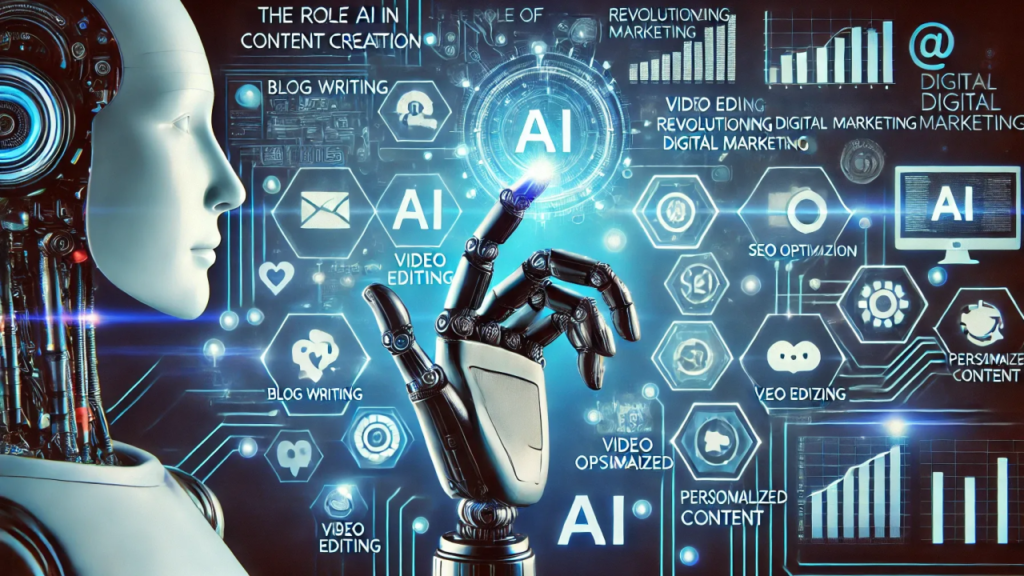
The Role of AI in Content Creation
How AI Content Writing Tools Work
AI content writing tools operate on sophisticated artificial intelligence models, often powered by deep learning and natural language processing. These AI tools analyze vast datasets of existing human writing to learn patterns, grammar, and style, enabling them to generate content based on specific prompts. When content creators input a prompt, the AI models use their learned knowledge to predict and produce relevant text, mimicking human writing to create various types of content, from articles to product descriptions. This process allows for the rapid creation of AI-generated content, making it a valuable asset for large volumes of content tasks.
Benefits of Using AI for Content Creation
Using AI for content creation offers numerous benefits, primarily revolving around efficiency and scale. AI can produce content quickly, significantly reducing the time and resources traditionally required for content creation. This speed is invaluable for generating large volumes of content, such as numerous product descriptions or routine content updates. Furthermore, AI writing tools can help overcome writer’s block by generating initial drafts or ideas, allowing human writers to refine and add the crucial human touch. AI content can also maintain a consistent tone and style across various pieces, ensuring brand voice coherence in digital marketing efforts.
Limitations of AI in Writing
Despite its advantages, there are limitations to AI writing. While AI can produce factually accurate and grammatically correct text, it often struggles to replicate genuine human creativity, emotional depth, or nuanced understanding. AI-generated content may lack the unique perspective and subtle undertones that a human writer naturally brings. The AI models, while advanced, cannot fully grasp complex human experiences or develop a truly authentic brand voice, which can make AI content feel generic or impersonal compared to human-written content. This highlights that AI cannot yet replace human creativity.
SEO Considerations for AI vs Human Writing
Optimizing AI-Generated Content for SEO
Optimizing AI-generated content for SEO requires a strategic approach to ensure it ranks well and engages audiences. While AI tools can generate content quickly, content creators must still review and refine it to incorporate relevant keywords naturally, structure it for readability, and ensure it aligns with search intent. The key is to blend the efficiency of AI to write content with human oversight to enhance quality and search engine visibility. This ensures that AI content not only meets technical SEO requirements but also offers genuine value, making it better than AI-generated content alone in terms of performance.
Human Touch in SEO and Content Engagement
The human touch is indispensable in SEO and content engagement, as human writers bring an innate understanding of audience psychology and cultural nuances that AI cannot fully replicate. Human content writers excel at crafting compelling narratives, injecting empathy, and developing a unique brand voice that deeply resonates with readers. This emotional connection fosters higher engagement, longer dwell times, and ultimately, better SEO performance through positive user signals. While AI tools can assist, the human writer provides the subtlety and creativity necessary to create content that feels authentic and truly captures the audience’s attention.
Balancing AI and Human Strategies in Digital Marketing
Achieving a successful content strategy in digital marketing involves balancing AI and human content creation. This collaboration ensures both efficiency and quality, developing a powerful and comprehensive content strategy that maximizes both SEO performance and audience engagement.
Here’s how AI and human collaboration in content creation works:
| AI Content Creation | Human Content Creation |
| Generating content for routine tasks or large volumes of content. | Focusing on complex, creative, and strategic pieces that require genuine human creativity and a deep understanding of the brand’s voice. |
Identifying the Differences: AI vs Human Content


How to Tell the Difference Between AI and Human Content
Distinguishing between AI-generated content and human-written content often requires a keen eye for subtlety and nuance. AI writing, while grammatically correct and coherent, may sometimes lack the unique perspective, emotional depth, or idiosyncratic style that a human writer naturally imbues. Human content writers bring a distinct brand voice, personal anecdotes, and a deeper understanding of cultural contexts that AI tools struggle to replicate. Look for consistent, flawless grammar but potentially generic phrasing in AI-generated text, versus the more varied, sometimes imperfect but always authentic, human touch in human writing.
When to Use AI vs Human Writing
The decision of when to use AI versus human writing hinges on the specific content creation goals and desired impact. A balanced content strategy often involves leveraging AI for foundational tasks, allowing human writers to focus on high-value, impactful pieces that truly connect with the audience. Consider the following breakdown:
| Content Creation Tool | Best For |
| AI | Large volumes of content, routine content (e.g., product descriptions), initial drafts. |
| Human Writer | Genuine human creativity, emotional resonance, strategic thinking, strong brand voice. |
Future Trends: AI and Humans in Writing
The future trends in writing indicate an increasing collaboration between AI and humans, rather than one completely replacing the other. AI writing tools will continue to evolve, offering more sophisticated capabilities for content creation, but the human element—human creativity, critical thinking, and emotional intelligence—will remain paramount. Content creators will increasingly use AI to write various types of content more efficiently, while human content writers will refine, personalize, and strategize. This symbiotic relationship, where AI and humans work together, promises to elevate the quality and scale of content creation, making content that feels truly impactful.
Lifetime Deals on AI Content Writing Tools
Lifetime deals on AI content writing tools present an attractive opportunity for content creators looking to integrate AI into their content strategy without recurring costs. These deals offer perpetual access to AI writing platforms, allowing users to generate content, create product descriptions, and produce other forms of AI-generated content indefinitely. Such offers can significantly reduce long-term expenses for digital marketing agencies and individual content writers. Investing in these AI tools allows for continuous experimentation and scaling of content creation, ensuring that businesses can consistently produce large volumes of content and stay ahead in the competitive digital landscape.


